중국어 유의어 반의어 찾기
A Chinese word may have several senses, so synonyms and antonyms should be grouped by meaning.
중국어 유의어 반의어 찾기 helps users avoid mechanical replacement and choose Chinese words by sense, tone, formality, and context.
A Chinese word may have several senses, so synonyms and antonyms should be grouped by meaning.
Words such as 开心, 快乐, 愉快, and 高兴 are close, but their tone and sentence fit are different.
Some words have no strict antonym and need semantic-opposite or context-opposite candidates.
중국어 유의어 반의어 찾기 combines a local Chinese thesaurus, examples, nuance notes, batch lookup, and writing assistance.
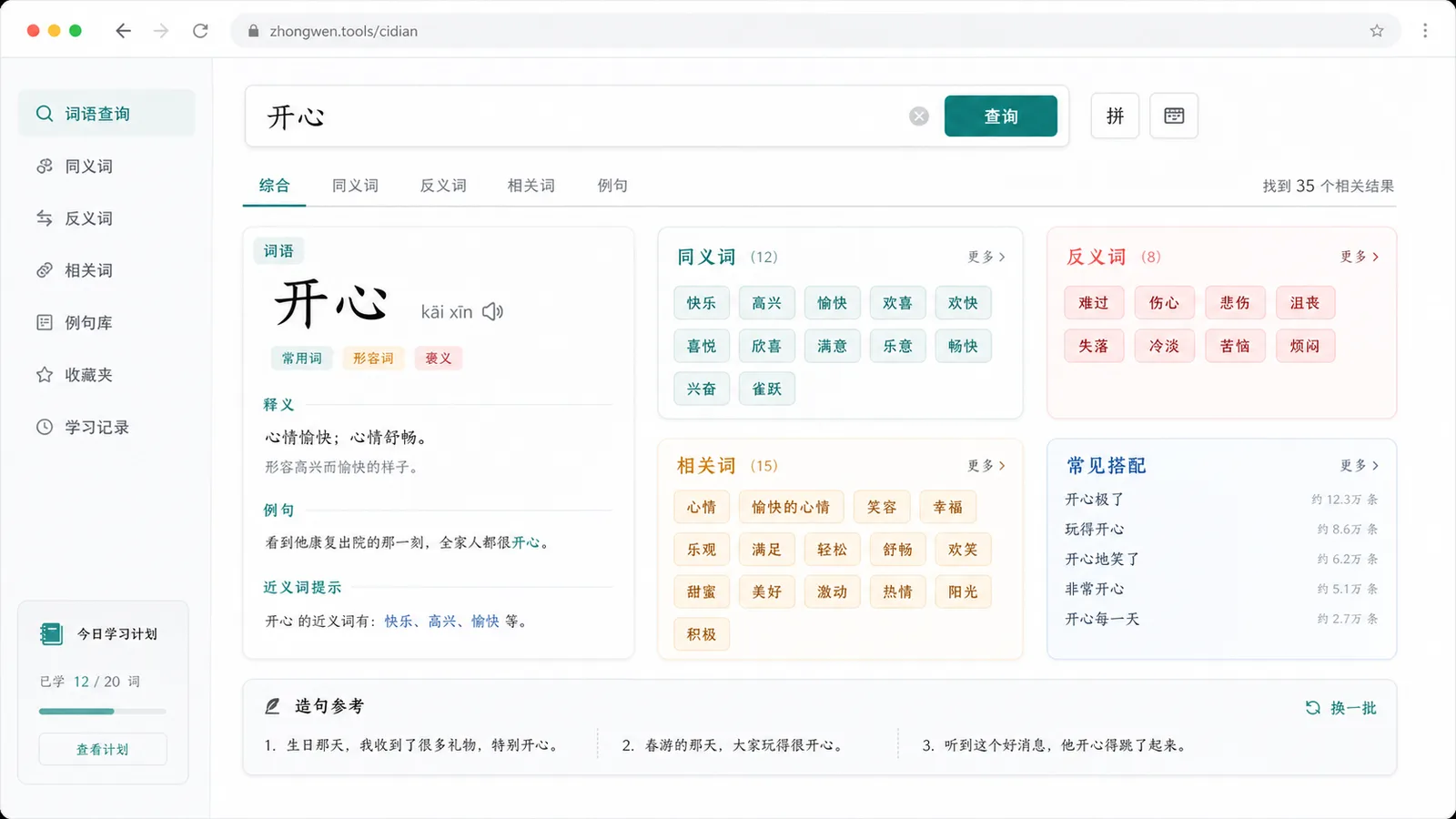
Query one Chinese word and see synonyms, antonyms, related words, definitions, examples, tags, and replacement advice.
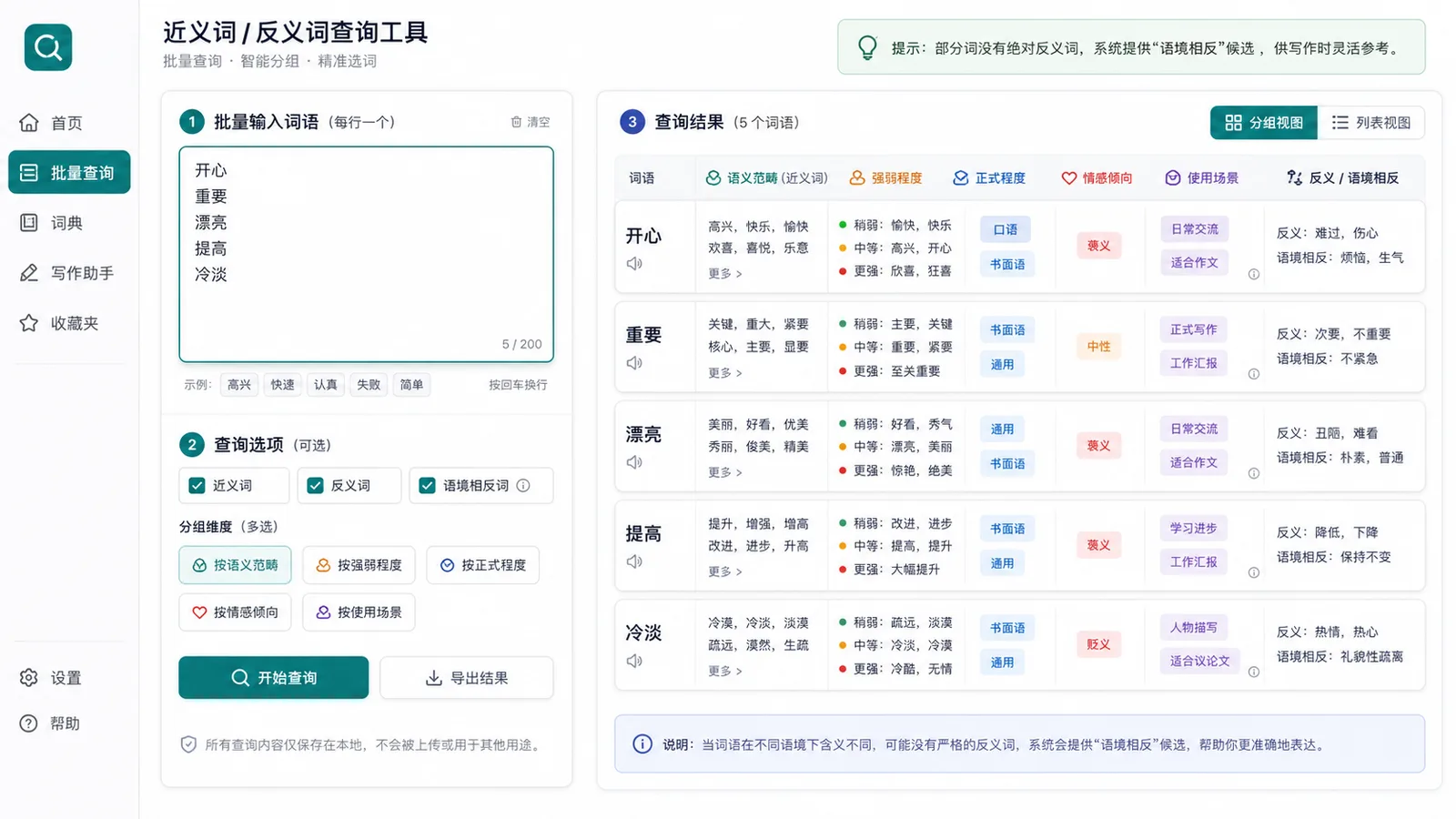
Paste many words such as 开心, 重要, 漂亮, 提高, 冷淡 and compare counts and grouped candidates.
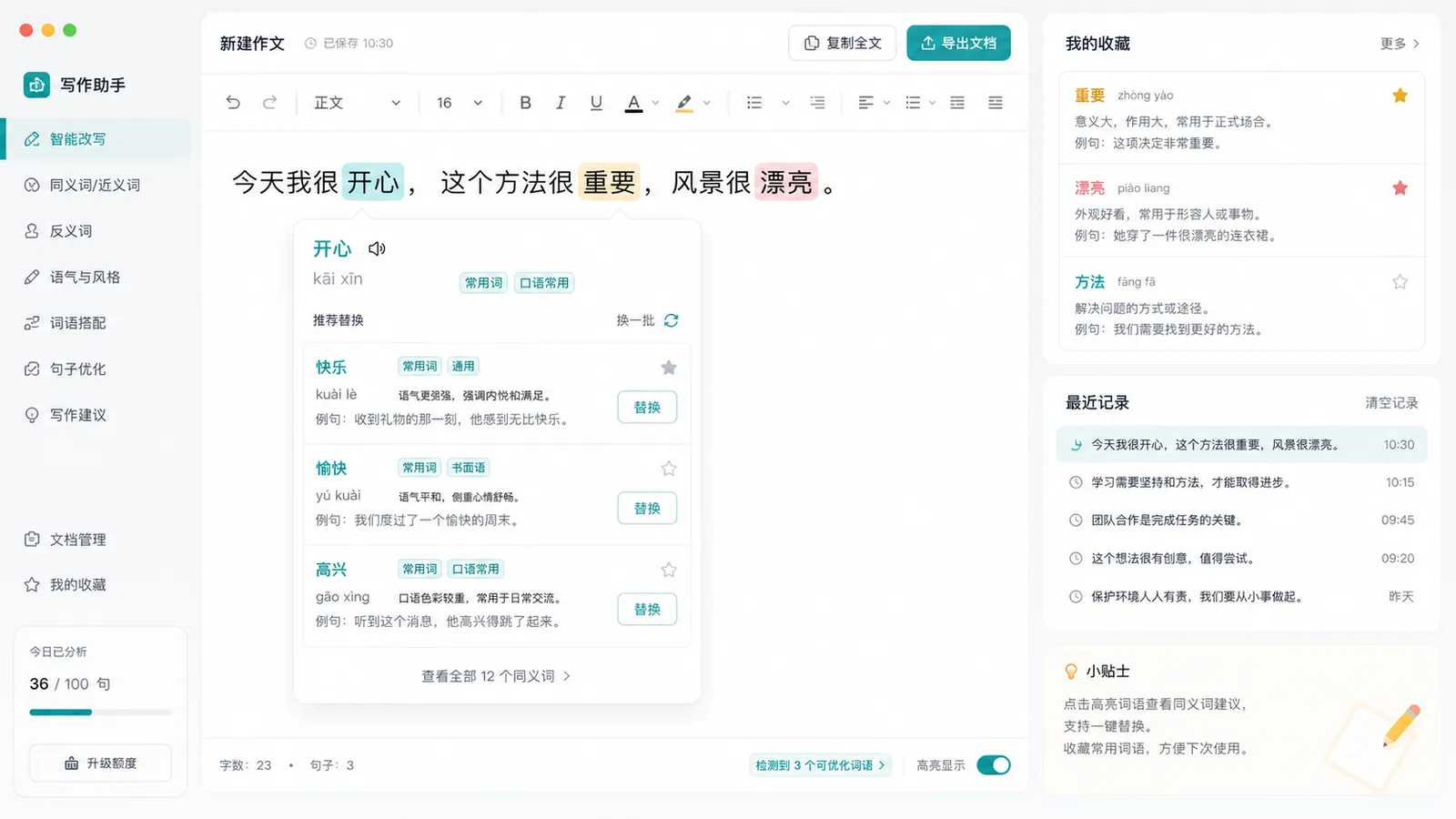
Analyze a Chinese sentence, highlight common words, and continue exploring better replacement words.
중국어 유의어 반의어 찾기 works for students, Chinese learners, editors, creators, SEO copywriters, and daily writing.
Enter a Chinese word, several words separated by line breaks, or a complete Chinese sentence.
도구 열기Review each sense separately and compare synonyms by strength, formality, tag, and scene.
도구 열기Copy results, copy a single word, favorite useful words, clear input, pick a random word, or reopen recent queries.
도구 열기중국어 유의어 반의어 찾기 turns Chinese vocabulary lookup into a practical writing workflow.
See definitions, examples, synonyms, antonyms, related words, result counts, tags, and nuance notes for one Chinese word.
Process many Chinese words together and compare the most useful synonym and antonym candidates quickly.
Highlight common words in a Chinese sentence and choose replacement synonyms that fit tone and context.
중국어 유의어 반의어 찾기 supports Chinese composition, vocabulary learning, editing, copywriting, and content optimization.
Improve Chinese compositions by replacing repeated words and choosing more precise expressions.
Expand vocabulary with definitions, related words, examples, and differences between near-synonyms.
Refine titles, product copy, article wording, and proofreading suggestions without sending text to a server.
중국어 유의어 반의어 찾기 pairs well with other browser tools for cleaning, formatting, and optimizing Chinese text.
Use the text cleaner before checking vocabulary when copied text contains extra spaces or messy line breaks.
Use the social media character counter after replacement to keep Chinese titles, captions, and posts within limits.
Use the traditional Chinese converter when the improved wording must also be prepared for Simplified or Traditional Chinese audiences.
Common questions about 중국어 유의어 반의어 찾기, local data, context, and replacement quality.
No. The lookup dictionary, sentence analysis, favorites, and recent history run locally in the browser.
It recommends candidates, but final replacement should be checked against the sentence meaning, tone, collocation, and audience.
Some Chinese words do not have a strict antonym for every sense, so the tool labels semantic or context-opposite candidates as writing references.